Here are our tips and advice for going to the GP when you’ve noticed a change in your chest. This includes:
– What to do before your appointment
– During your appointment
– What to do before you leave your appointment
– The CoppaFeel! READY list
A note on wording:
Breast cancer can affect anybody, and everybody is welcome in CoppaFeel!’s community.
We use the word chest to include all bodies and genders, and breast when we need to be clinically accurate. When we use these words, we mean the area from your ribs up to your collarbone and armpits, including your nipples.
We’re actively inclusive in our language, and we ask people how they want to be described. You might prefer to call your chest something else, and that’s ok!
Before your appointment
Make sure you are offered a face-to-face appointment and not a remote consult (on the phone or on a video call). You will need to be examined, which means having your chest checked.
Make notes. This could be on your phone or on paper. Note your symptoms, worries, and what you expect to happen next. This helps you share as much information as possible, and helps the GP answer your questions.
The GP will want to know:
When your symptoms started.
Any treatments you have tried.
If your symptoms change with hormonal changes, for example around your period if you have periods.
Whether you feel well in yourself apart from the chest concerns.
They will ask about any history of breast and ovarian cancer in your family. You could talk to family members about this before your appointment if you are unsure.
Write down any questions you have.
Make a list or bring any medicines or pills, whether prescribed or over the counter. Hormonal medication is important to note.
Ask for a chaperone if you would like one. A chaperone is a trained adult who will support you and make sure you are comfortable during a physical examination. If you need help undressing or putting clothes back on, they can help with this if you ask them.
Think about wearing a separate top and bottoms as the GP will need to look at your chest area.
Ask for a double appointment if you think you will need more time, and if you have more than one concern. You may not be able to have a double appointment on the day, but you will always be given a follow-up appointment if needed.
Can I take someone with me?
Yes, you can take someone with you. This could be someone you trust and feel comfortable with, like a friend or family member.
You could ask this person to make notes so you can focus on what the GP is saying.
During your appointment
Your GP will ask you to tell them what is happening, how long it has been there and how it’s making you feel.
You can look at your notes and read from them if you like.
Try and give as much information as you can.
You don’t need to use medical words. Tell them in your own words.
The GP may ask to look and feel your chest to understand the unusual changes. This is when you can ask to have a chaperone in the room with you. The GP should offer this too.
You should have the chance to ask any questions. You can ask for the examination to stop at any point if you don’t feel comfortable or you are in pain.
Make sure you ask the GP to explain what they think is causing the unusual changes once they have finished the examination.
Before you leave the appointment
Check:
You have covered everything on your list.
The GP has given a reason for your symptoms that you understand. If it is not possible to offer this, they need to put a clear plan in place for the next steps in your care.
You understand. You can ask “can I just check I understand what you have said?”
You know what should happen next and when it will happen. Write it down.
If you are still worried at the end of the appointment, you can ask the GP if they think it could be breast cancer.
If the GP says they do not think it is breast cancer, you could ask:
Why don’t you think it is breast cancer?
Do I need to be referred to a breast clinic?
What should I do if my symptoms don’t get better?
When should I come back?
Is there anything I can do to help ease my symptoms?
Questions to ask:
What happens next?
Do I need to come back and see you? If so, when?
Who do I contact if things don’t get better or if they get worse?
Do you have any written information?
Where can I go for more information?
Is there a support group or any other source of help?
Can you give me copies of any letters you send? A copy of your appointment with any referral letters can be found on the NHS app.
Can I ask for a second opinion from a different GP?
If you’re not happy after the GP appointment, you can ask to see a different GP.
You can ask at reception for a second appointment, and if you want to, you can tell them why you’re asking for this.
If you see a different GP, you’ll need to tell them everything again, so remember to take your notes with you.
Breast cancer can affect you at any age.
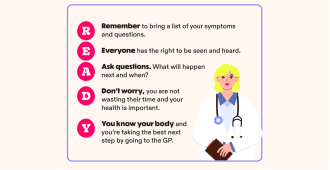
Here is your very own CoppaFeel! READY list before going to the GP.
Remember to bring a list of your symptoms and questions.
Everyone has the right to be seen and heard.
Ask questions. What will happen next and when?
Don’t worry, you’re not wasting their time. Your health is important.
You know your body, and you’re taking the best next step by going to the GP.
Be proud of yourself for getting checked out!
We made a poster with our friends at Teenage Cancer Trust!
The poster will include the READY list above, is double-sided A5 and is available in both physical and digital copies








 Real stories
 Check your chest
 Get a reminder
 e-learning
 Resources
 Breast cancer information
 Fundraise
 Volunteer
 Our impact