
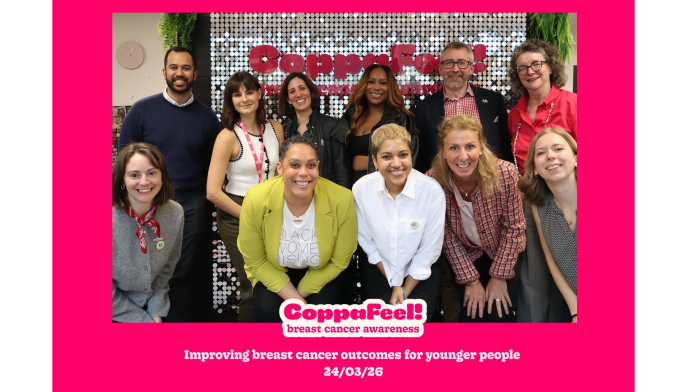
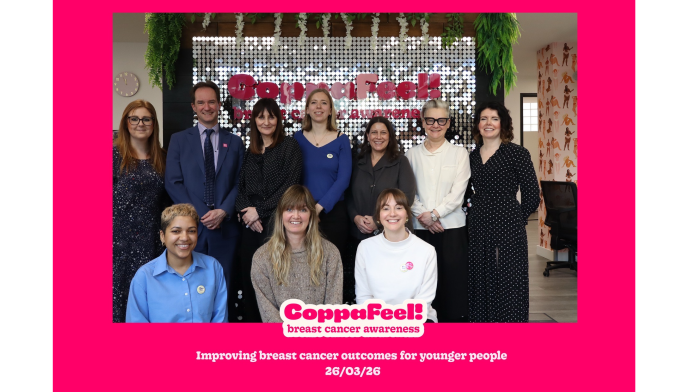
Over the past weeks, we hosted three fantastic roundtable discussions on how we can improve outcomes for younger people with breast cancer. The roundtables brought together experts from across policy, healthcare, the charity sector and people with lived experience – and asked how we can drive awareness, early diagnosis and better treat younger people with breast cancer.
Because we know that breast cancer in younger people isn’t the rare exception, it’s on the rise – and outcomes are worse.
More awareness
For our first roundtable, Clive Jones MP, Chair of the APPG on Breast Cancer, opened by sharing his own story – being a younger man presenting with symptoms – being dismissed, until he pushed and got a second opinion and was ultimately referred.
Unfortunately we know that this is the norm for too many younger people. In a survey we put out at the end of last year, 1 in 3 younger people who have had a breast cancer diagnosis told us they were initially dismissed, delaying their diagnosis.
During the discussion, we heard about fantastic initiatives from everyone in the room. But what happens if you don’t live in an area where there is a pop-up stall? If your family members don’t speak about cancer or their body? If your GP doesn’t have CoppaFeel! leaflets in the waiting room? What if you haven’t had a UniBoob team because you don’t go to university, or your community group is focusing on another area of public health?
How can we embed awareness as standard? What are the opportunities that lots of us (if not most of us) go through? We spoke about smear tests, NHS Health Checks, prescription runs and conversations about contraception. How could we use these teachable moments to make sure awareness and chest checking becomes the norm? And make sure that we’re funding charities and grassroots organisations to continue doing and scaling the fantastic work they’re doing.
More than awareness
But we know that work needs to extend beyond awareness. Because screening picks up cancers much earlier than checking. People under screening age who are at increased risk can go through family history clinics. But what if you don’t know your family history, or you don’t know that these clinics exist? Or your risk isn’t based on family history or known gene mutations? How can we get better at identifying risk in under-50s when 1 in 6 breast cancer cases occur in this age group? When the average age of diagnosis for Black women is 46?
Dawn Butler MP (https://www.linkedin.com/in/dawn-butler-mp-00645121/) shared her own experience of breast cancer, and the importance of getting early diagnosis right. She was diagnosed with breast cancer at an early stage because she had been screened before age 50. So when she came to her first mammogram appointment, doctors were able to diagnose her cancer much earlier, seeing inconsistencies with her first scans.
We discussed how we could better identify risk – beyond just family history – and how that might inform a more risk-based approach to screening. Risk assessments that test for your lifetime risk of breast cancer can take as little as seven minutes. Could these be the basis of a future screening programme? And how do you balance informing people and giving them control with health anxiety?
We spoke about innovation, from one-stop shops that meet younger people and underserved communities where they are, in places that are safe and familiar to them, removing barriers to support quick and early diagnosis, to new technology like liquid biopsies – simple blood tests – or breast density scans, that might make testing or risk assessment easier.But also about how we can get the basics right – making sure we’re bringing in grassroots organisations and that our approach is informed by and inclusive of the communities we’re trying to reach.
Towards better outcomes
And ultimately, to improve early diagnosis, survival and long-term health, we need to drive forward research. For our last roundtable, we discussed all things research, data and innovation. Because we don’t entirely understand what’s driving an increase in breast cancer in younger people. We don’t really understand what the specific risk factors are or why outcomes are worse.
How can we improve access to clinical trials for younger people and reduce barriers to participation? Younger people are less likely to be invited on to clinical trials, and might need more support to participate – from childcare to travel costs. But we can’t afford to not include them.
Beyond including younger people’s experience in ongoing research, we have to make sure there is dedicated research focused on younger people – on risk, prevention, symptoms, treatment responses and the psychosocial impact. Because one size doesn’t fit all.
Data, or a lack of, also came out as a big theme. How can we standardise data and make sure we’re actually measuring the right things? And what are more innovative forms of data we can use?
What happens next
Over the coming weeks, we are bringing together the insight from these discussions and the research we’ve been doing. We will be launching a flagship report on breast cancer in younger people in the UK, and what needs to happen to improve outcomes for younger people. Thanks to everyone who shared their brilliant ideas over the last two weeks. We can’t wait to work with you on what comes next – to improve outcomes for younger people with breast cancer.
 Real stories
 Check your chest
 Get a reminder
 e-learning
 Resources
 Breast cancer information
 Fundraise
 Volunteer
 Our impact